The Definitive Guide to Game of Thrones Books: Unravelling the Epic Tapestry of A Song of Ice and Fire
Last Updated:
For millions across the globe, the phrase "Game of Thrones" conjures images of dragons, political intrigue, and the battle for the Iron Throne. Yet, the true depth of this universe lies not on the screen, but within the pages of George R.R. Martin's monumental book series, A Song of Ice and Fire. While the TV adaptation brought Westeros to life, the original novels offer a richer, more complex, and ultimately unfinished narrative that has captivated readers for decades. This guide is your ultimate companion to the literary world of Westeros and beyond.
Search the Archives of Westeros
Looking for a specific character, house, or event in the vast lore? Search our extensive database.
I. The Genesis of a Masterpiece: Understanding A Song of Ice and Fire
The story began long before it became a television phenomenon. George R.R. Martin, an author with a penchant for complex characters and morally grey worlds, started weaving this tale in 1991. The first book, A Game of Thrones, was published in 1996. Its title would later become the namesake for the entire cultural juggernaut, but the book series itself is titled A Song of Ice and Fire—a name that hints at the ultimate, mystical conflict looming behind the political squabbles.
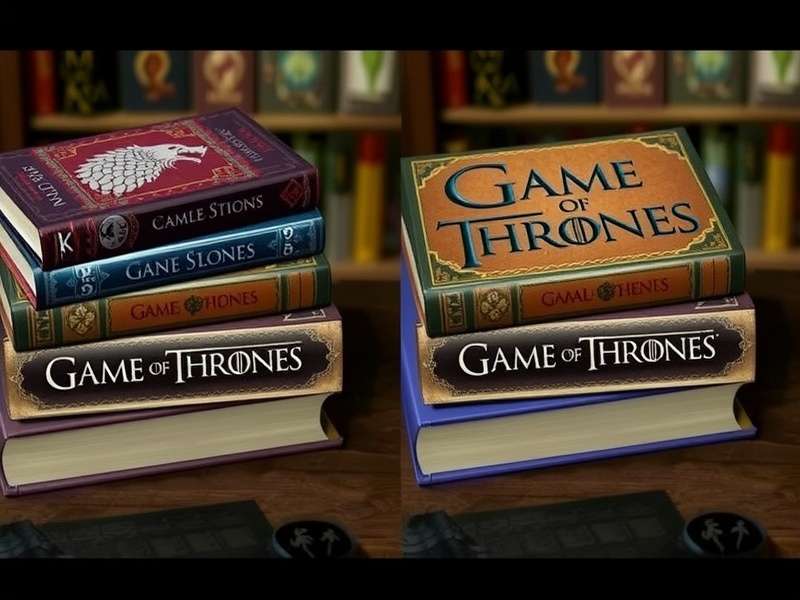
The epic book series that started it all. Each volume expands the intricate world of Westeros.
For newcomers wondering what Game of Thrones is fundamentally about, the books provide the clearest answer: it's a story about power, identity, and the human heart in conflict with itself, set against the backdrop of a world where summers and winters last for years, and ancient evils stir in the frozen north.
1.1 The Core Literary Philosophy
Martin's writing is often described as "historical fiction in a fantasy setting." He draws heavy inspiration from real-world history, particularly the Wars of the Roses, the complexity of medieval politics, and the fragility of human ambition. Unlike traditional fantasy, there are few pure heroes or villains. A character making a morally questionable choice in one chapter might perform a heroic act in the next. This realism is a hallmark of the series' depth.
📚 Exclusive Insight: According to unpublished notes and convention talks, Martin initially planned a trilogy. The story's scale exploded as he explored the viewpoints of secondary characters, leading to the currently planned seven-book series. This expansion is why the world feels so lived-in and vast.
II. A Deep Dive into Each Volume of the Game of Thrones Books
Let's break down each published book in the main series, analysing its plot, key contributions to the lore, and its unique place in the saga.
2.1 A Game of Thrones (1996)
The book that started it all. We are introduced to the Stark family of Winterfell, the ruling Baratheons in King's Landing, the exiled Targaryens across the Narrow Sea, and the sinister Lannisters. The central mystery—the death of the Hand of the King, Jon Arryn—spirals into a continent-wide war. The book ends with Ned Stark's execution, a shocking moment that taught readers this was a story where no one was safe.
2.2 A Clash of Kings (1998)
With King Robert dead, the realm fractures. Multiple kings rise: Joffrey Baratheon in King's Landing, Robb Stark in the North, Stannis Baratheon on Dragonstone, and Balon Greyjoy in the Iron Islands. This book expands the point-of-view characters, introducing Davos Seaworth and Theon Greyjoy. It also delves deeper into magic, with the birth of the shadow assassin and Daenerys's visions in the House of the Undying.
2.3 A Storm of Swords (2000)
Widely considered the peak of the series. This volume contains the infamous Red Wedding, the Purple Wedding (Joffrey's demise), the Battle of the Wall, and the rise of Jon Snow as a leader. The pacing is relentless, and the character arcs undergo seismic shifts. Tyrion's trial and subsequent patricide is a masterclass in tragic character development.
Many fans who watched Game of Thrones were stunned by these events, but the book provides even more internal monologue, making the betrayals more poignant.
2.4 A Feast for Crows (2005) & A Dance with Dragons (2011)
Martin made the controversial decision to split the narrative geographically rather than chronologically. A Feast for Crows focuses on King's Landing, the Riverlands, Dorne, and the Iron Islands (Cersei, Jaime, Brienne, Sansa, Arya). A Dance with Dragons covers the North, the Wall, and Essos (Jon, Daenerys, Tyrion, Bran).
These books are denser, more introspective, and world-building heavy. They introduce crucial new players like the "Griff" storyline and the deep politics of Dorne and the Iron Islands—elements largely streamlined or cut from the TV show.
"A reader lives a thousand lives before he dies. The man who never reads lives only one." – Ser Jorah Mormont (A Dance with Dragons)
III. The Great Divergence: How the Game of Thrones Books Differ from the TV Series
After roughly season 5, the HBO show began to outpace the published books, leading to significant and sometimes controversial deviations. Understanding these differences is key to appreciating the source material's unique direction.
3.1 Major Plotlines Absent from the Show
- Young Griff (Aegon Targaryen): A potential rival claimant to Daenerys, landing in Westeros with the Golden Company. His existence changes the dynamics of the Targaryen restoration entirely.
- Lady Stoneheart: The reanimated, vengeful Catelyn Stark leading the Brotherhood Without Banners. A powerful symbol of the consequences of violence and betrayal.
- The Dornish Master Plan: In the books, Doran Martell is a patient, cunning strategist seeking vengeance for Elia, not the impulsive Ellaria Sand of the later seasons.
- Euron Greyjoy's Eldritch Horror: Book Euron is a terrifying, magic-using pirate claiming to have sailed to Valyria and possessing a potentially world-ending horn. Far removed from the show's version.
These elements suggest Martin's endgame will be markedly different, especially concerning the Iron Throne's ultimate fate. For more on the expanded universe, explore the concept of a Game of Thrones spin-off, many of which may draw from these unused book plots.
3.2 Character Arcs and Fates
Many characters are alive in the books who died in the show (e.g., Ser Barristan Selmy, Jojen and Meera Reed's fates are different, Stannis is still campaigning in the North as of ADwD). Conversely, some characters have much deeper development, like Sansa's ongoing mentorship under Littlefinger in the Vale, or Jaime's more complex psychological journey in the Riverlands.
IV. Beyond the Page: The Immense Lore of Westeros & Essos
The books are filled with histories, legends, and prophecies that provide context for current events. This "deep lore" is what makes the world feel ancient and real.
4.1 The History of the Seven Kingdoms
From the Dawn Age and the coming of the First Men, to the invasion of the Andals, to Aegon's Conquest 300 years before the main story. Martin has fleshed this out in companion works like Fire & Blood and The World of Ice and Fire. Understanding this history enriches every political maneuver in the main series.
4.2 Prophecies and Their Ambiguity
The "Prince That Was Promised" and "Azor Ahai" prophecies are central to the conflict with the Others. The books also feature Cersei's prophecy from Maggy the Frog, Daenerys's visions, and the "dragon has three heads" prophecy. Martin masterfully uses prophecy as a driving, yet misleading, force.
This rich backstory has inspired other media, including the highly-rated IMDb Game of Thrones entries for the show, and even international adaptations like the Polish Gra o Tron.
Join the Maester's Discourse
Share your own theories, analysis, or questions about the books with fellow readers.
Rate This Literary Saga
How would you rate the A Song of Ice and Fire book series overall?
V. Literary Analysis: Themes, Style, and Impact
Beyond plot, the series is a rich text for analysis. Martin explores themes of power (who deserves it? how is it wielded?), identity (Stark vs. Snow, Lannister vs. Kingslayer), duty vs. love, and the cyclical nature of history and violence.
5.1 The Unreliable Narrator
With a limited third-person perspective, we only see the world through the eyes of specific characters, complete with their biases, misconceptions, and limited knowledge. This technique brilliantly immerses the reader and creates mystery. For example, what really happened at the Tower of Joy? We only have Ned's fever-dream memory.
5.2 Influence on Modern Fantasy
A Song of Ice and Fire helped popularise "grimdark" fantasy—a grittier, more realistic subgenre. It proved that fantasy could be a vehicle for complex political and philosophical questions, appealing to a mainstream adult audience. Its success paved the way for countless other series and solidified the cultural moment that led to the blockbuster TV adaptation.
It also sparked a wave of related media, from video games (sometimes colloquially called King of Thrones) to vast online wikis and forums dedicated to dissecting every clue.
VI. The Long Wait: The Winds of Winter and A Dream of Spring
The elephant in the room. Fans have been waiting for The Winds of Winter (Book 6) for over a decade. Martin is famously meticulous and has admitted the story's complexity, the "Meereenese Knot," has been a challenge. Updates are sporadic, but he has confirmed the book is much larger than its predecessors and will have significant consequences.
Based on released sample chapters and author comments, we can expect:
- Two massive battles (the Battle of Ice at Winterfell and the Battle of Fire at Meereen) right at the start.
- Major resolutions for characters like Stannis, Jaime, Brienne, and Cersei.
- Further advancement of the Others' threat from the North.
- The possible convergence of the split Feast/Dance storylines.
As for A Dream of Spring (Book 7), its content remains a mystery, but it is expected to bring the conflict with the Others to a climax and provide the final resolution for the saga of the Iron Throne.
VII. The Citadel of Fandom: Joining the Reader Community
Part of the joy of these books is the global community of fans who analyse every sentence, create art, write fan fiction, and debate theories (like the infamous "R+L=J," which the show confirmed). Websites, subreddits (r/asoiaf), podcasts, and YouTube channels are dedicated to deep-dive analysis. Engaging with this community can unlock new layers of appreciation for Martin's work.
In conclusion, the Game of Thrones books are more than just the source material for a TV show; they are a sprawling, ambitious, and profoundly detailed work of modern fantasy literature. They demand patience and engagement but reward the reader with a depth of world-building, character complexity, and thematic richness that is rarely matched. Whether you're a show watcher looking to understand the "true" story or a lifelong fantasy reader, the journey through the pages of A Song of Ice and Fire is one of the most rewarding literary adventures available.
Article comprehensively updated: