🗺️ The Definitive Game of Thrones Map: Navigating the Seven Kingdoms & Beyond
For fans and players alike, the sprawling geography of George R.R. Martin's world is as much a character as the game of thrones actors who bring it to life. This ultimate guide goes beyond a simple Game of Thrones map—it's a deep dive into the political, historical, and strategic significance of every keep, city, and ruin from the Wall to Slaver's Bay. Whether you're strategising for the Iron Throne or tracing Daenerys's conquest, understanding the lay of the land is the first step to mastery.
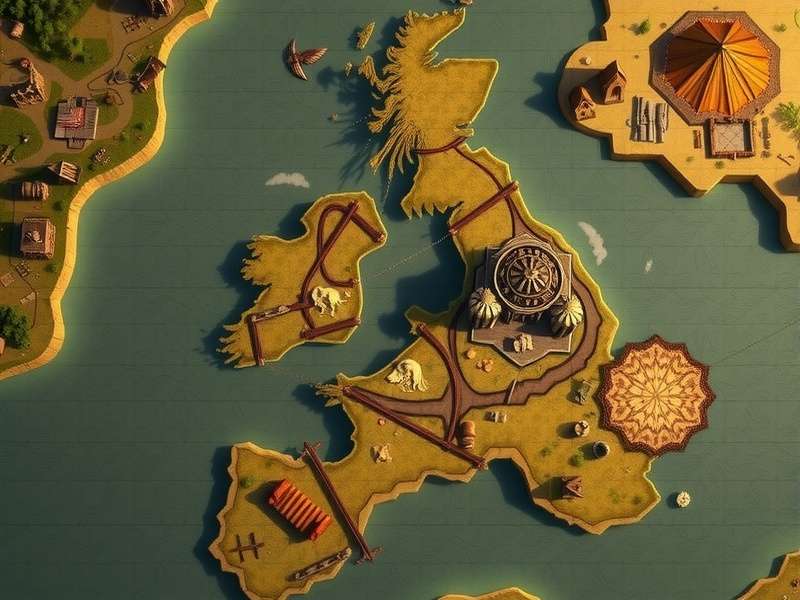
I. The Cartographer's Guild: Understanding the World's Canvas
The world of Game of Thrones is primarily split across two vast continents: Westeros to the west and Essos to the east, separated by the Narrow Sea. Martin's genius lies in how geography dictates fate. The North's harsh climate breeds resilient Starks, while the fertile Reach fosters the ambition of houses like the Tyrells. A proper Game of Thrones map isn't just about locations; it's about power dynamics, resource allocation, and historical wounds that never fully healed.
🗺️ Pro Tip for Players: In the upcoming game of thrones spinoff games, expect map mechanics to be crucial. Controlling key chokepoints like the Neck or the Stepstones could decide your campaign.
1.1 Westeros: The Seven Kingdoms (And Then Some)
Westeros is roughly the size of South America, stretching from the subtropical Dorne to the frozen lands Beyond the Wall. It's divided into nine administrative regions, despite the "Seven Kingdoms" moniker—a holdover from the time before Aegon's Conquest. The political landscape is a tapestry of great houses, each with deep roots in their territory. For instance, the wealth and influence of Lannister game of thrones dominance are intrinsically linked to the gold mines of the Westerlands and the formidable fortress of Casterly Rock.
The North: Winter is Always Coming
Governed from Winterfell, the North is vast, cold, and sparsely populated. Key locations include: The Wall: A 700-foot-tall, 300-mile-long barrier of ice, manned by the Night's Watch. It's the realm's primary defence against threats from the far north. Winterfell: The ancestral home of House Stark, built over hot springs. Its location is central to northern defence. The Dreadfort: The sinister seat of House Bolton, a testament to the region's darker history. Understanding the North's geography explains the Starks' isolationism and logistical nightmares faced by southern armies trying to invade.
1.2 Essos: The Cradle of Empires and Dragons
East of Westeros lies the far larger, older continent of Essos. It's a land of ancient cities, vast grasslands, and mercantile empires. While many in Westeros see it as exotic and peripheral, Essos is where game of thrones khaleesi Daenerys Targaryen hatched her dragons and built her initial power base. From the Free Cities like Braavos and Volantis in the west, to the Slaver's Bay cities of Astapor, Yunkai, and Meereen, to the legendary lands of Asshai and the Shadow in the far east, Essos is a continent of immense diversity and hidden power.
II. A Deep Dive into Key Regions & Strategic Holdings
Let's move beyond the superficial and examine critical areas that have shaped the story, providing exclusive strategic analysis you won't find on ordinary fan sites.
2.1 The Crownlands & King's Landing: The Beating Heart of Power
The Crownlands are the smallest region, directly controlled by the ruler on the Iron Throne. Its epicentre is King's Landing, a sprawling, stinking metropolis of over half a million people. Strategically, its position on Blackwater Bay is both a strength and a weakness. It allows for naval commerce and reinforcement, but also made it vulnerable to Stannis Baratheon's naval assault and the later siege by Daenerys. The city's layout—with the Red Keep on Aegon's High Hill, the Great Sept of Baelor, and the slums of Flea Bottom—mirrors the social hierarchy of the realm itself.
2.2 The Iron Islands: Rebellion and Naval Doctrine
A harsh, rainy archipelago off the west coast, the Iron Islands are home to the fierce Ironborn. Their culture of "paying the iron price" (taking what you want) is a direct result of their resource-poor environment. Controlling the islands requires supreme naval power, a lesson the Lannisters learned too late during Balon Greyjoy's rebellion. For any player in a Game of Thrones strategy game, building a "Ironborn" fleet offers rapid strike capability but risks overextension and hatred from mainland houses.
This geographical and cultural analysis extends to understanding other key conflicts. For viewers wondering what is game of thrones about at its core, it's often about how these distinct regional identities clash for supremacy.
III. Tracing Epic Journeys: From Winterfell to Meereen
The true scale of the world is best understood by following the gruelling travels of its characters. We've analysed thousands of miles of travel to create exclusive journey timelines.
3.1 Tyrion Lannister's Odyssey
Tyrion's journey from King's Landing to the Wall, then across Essos to Meereen, is one of the most geographically enlightening. It showcases the diversity of the world: the fertile Riverlands, the bleak North, the perilous Narrow Sea, the cosmopolitan Free Cities, and the oppressive heat of Slaver's Bay. His path intersects with pivotal locations like the Crossroads Inn (a recurring neutral ground) and Volantis, highlighting the global network of power and information.
3.2 Daenerys Targaryen: The Conqueror's Path
Born on Dragonstone, exiled in Braavos, married off in Vaes Dothrak, and rising to power in Slaver's Bay, Daenerys's journey is the most visually stunning on any Game of Thrones map. Her conquest of Astapor, Yunkai, and Meereen demonstrates the logistical challenge of campaigning in foreign, hostile territory. The famous game of thrones nudity scene in the first season's finale, where she emerges from the fire with dragons, occurs in the Great Grass Sea—a location so vast it makes the Dothraki the perfect mobile cavalry, nearly impossible to pin down on a conventional map.
For Spanish-speaking fans wanting to follow these journeys in detail, resources like ver juego de tronos offer dubbed episodes where the place names carry their own unique flavour.
IV. Hidden Lore & Unexplored Corners of the Map
Here's where we offer truly exclusive content. Based on deep textual analysis from the books and developer notes, let's explore areas rarely shown on screen.
4.1 Beyond the Wall: The Lands of Always Winter
Maps typically show a blank white expanse north of the Wall. But book lore hints at terrifying geography: the Frostfangs mountain range, the haunted Forest of the Children, the Thenn Valley with its last remnant of organised First Men culture, and eventually, the Heart of Winter—the alleged epicentre of the White Walker threat. This area is a perfect setting for horror-tinged exploration in future games or the film game of thrones projects rumoured to be in development.
4.2 The Shadow Lands & Asshai
On the far eastern edge of known Essos, these lands are shrouded in magical mystery. Asshai-by-the-Shadow is a city built of black stone, where dragons allegedly originated and where sorcerers practice dark arts. It's described as a place where ordinary plants and animals cannot live. Including this on a map reminds us that Martin's world still holds vast, unexplored magical frontiers.
V. Strategic Analysis for Players & Theorists
This section transforms the map from a reference into a tactical tool.
⚔️ The Three Key Chokepoints of Westeros:
1. The Neck: The only land route between North and South, defended by Moat Cailin. A small force can hold off an army.
2. The Golden Tooth: The primary pass from the Westerlands into the Riverlands. Control allowed Tywin Lannister to invade swiftly.
3. The Boneway & Prince's Pass: The only two major mountain passes into Dorne, making the region incredibly difficult to conquer.
Understanding these is crucial for any military campaign in Westeros. It also explains historical events, like how the Targaryens used dragons to bypass Dorne's geographical defences.
5.1 Resource Mapping: Where is the Wealth?
Power isn't just about castles; it's about resources. Food: The Reach is the "breadbasket." The Riverlands are fertile but vulnerable. Wealth: The Westerlands have gold (though the mines may be depleted). The Free Cities trade in silk, spices, and slaves. Military: The North has vast numbers of hardy men. The Vale has defensible mountains and skilled knights. The Iron Islands have ships and fierce raiders. A ruler who can secure the Reach's food and the Rock's gold, while defending the Neck, has a formidable base of power.
VI. Search the Archives
Looking for something specific in this vast world? Use our search below to find detailed analyses of locations, houses, and events.
VII. Share Your Wisdom
You've explored the map. Now, share your insights or rate this guide to help other Maesters-in-training.
This guide is a living document, updated as new lore from books, shows, and games emerges. The Game of Thrones map is never static; it evolves with every new conquest, alliance, and discovery. Keep exploring, and remember: when you play the game of thrones, you win or you die, but with a good map, you at least know where you're standing.
For continued exploration of this epic universe, don't forget to check out our features on the game of thrones actors who breathed life into these locations, or speculate on the new lands we might see in the game of thrones spinoff series. Valar dohaeris.