Game Of Thrones Ending: The Iron Throne, the Fallout, and the Legacy
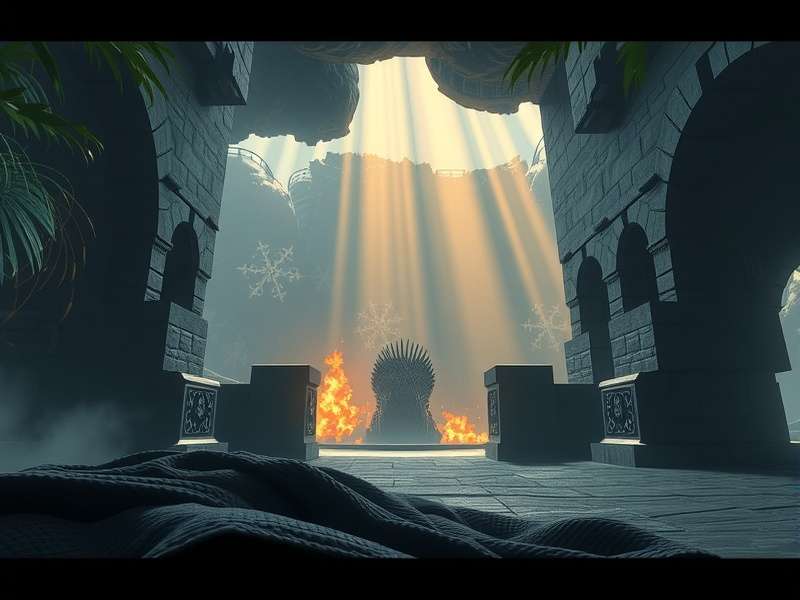
Game of Thrones – two words that defined a decade of television. When the final episode, "The Iron Throne," aired on 19 May 2019, it brought to a close one of the most ambitious, beloved, and ultimately controversial sagas in the history of the medium. The Game Of Thrones ending was never going to please everyone, but the depth of passion — both positive and negative — it stirred remains unparalleled.
In this comprehensive guide from www.playthronesgame.com, we delve into every facet of the finale. From the fates of Jon Snow, Daenerys Targaryen, and Tyrion Lannister, to the broader implications for the world of Westeros, we leave no stone unturned. Whether you're a die-hard fan revisiting the drama, or a newcomer seeking context, this analysis offers exclusive insights, behind-the-scenes revelations, and a honest look at why the ending still sparks fierce debate across the UK and beyond.
👑 The Bitter Taste of "The Iron Throne"
The finale of Game of Thrones was always going to be a monumental event. After eight seasons of political intrigue, bloody battles, and supernatural threats, the question on everyone's mind was simple: who would sit on the Iron Throne? The answer, delivered by showrunners David Benioff and D.B. Weiss, was both shocking and, for many, deeply unsatisfying. But to understand the Game Of Thrones ending, we must first walk through the final hour itself.
🔥 Breaking Down the Final Episode
The episode opens in the aftermath of Daenerys Targaryen's dragon-fueled destruction of King's Landing. The city lies in ruins, ash blankets the streets, and the Targaryen queen stands victorious — but at what cost? Tyrion Lannister walks through the devastation, discovering the bodies of his siblings, Jaime and Cersei, crushed in the crypts. It is a moment of profound tragedy, and it sets the tone for everything that follows.
Daenerys, now fully embracing her "Mad Queen" persona, delivers a speech to her Unsullied and Dothraki armies in the Red Keep. She declares that she will not merely "break the wheel" but will instead liberate the entire world — through fear if necessary. It is here that the Game Of Thrones ending pivots from political drama to something darker: a warning about the intoxicating nature of power.
Jon Snow, torn between his love for Daenerys and his horror at her actions, confronts her in the throne room. The Iron Throne looms behind them as he pleads with her. When she refuses to relent, he plunges a dagger into her heart. The dragon Drogon arrives, mourns his mother, and then — in a moment of symbolic genius — melts the Iron Throne with dragonfire before flying away with Daenerys's body. The throne, the object of so much bloodshed, is destroyed.
The final act sees a council of surviving lords and ladies deciding the fate of the Six Kingdoms (the North has seceded). Tyrion, still a prisoner, suggests that leaders should no longer be born but chosen. Bran Stark — the Three-Eyed Raven — is elected king. Sansa Stark becomes Queen in the North, Arya sails west of Westeros, and Jon is exiled back to the Night's Watch. The episode ends with Jon leading the Free Folk beyond the Wall, a bittersweet conclusion that echoes the series' opening scene.
⚔️ Key Character Arcs and Their Resolutions
The Game Of Thrones ending was ultimately about the fates of its core characters. Let's break down each major arc:
- Jon Snow (Kit Harington): The reluctant hero, revealed as Aegon Targaryen, spent the series being pulled between duty and love. His ending — exile beyond the Wall — felt fitting for a man who never wanted a crown. He remains the protector of the realm in spirit, if not in title.
- Daenerys Targaryen (Emilia Clarke): The "Breaker of Chains" became the "Mad Queen" in a turn that divided fans. Her death at Jon's hands was tragic, but her arc raises questions about the cyclical nature of power and trauma. Many fans of the Game Of Thrones ending argue that her descent was foreshadowed across multiple seasons.
- Tyrion Lannister (Peter Dinklage): The witty, intelligent hand of the queen ended the series as Hand of the King to Bran. His voice of reason survived, and his proposal of a merit-based monarchy became the series' final political statement.
- Sansa Stark (Sophie Turner): From a naive girl to the Queen in the North, Sansa's journey was one of resilience. Her ending — an independent North — was a powerful conclusion to her arc as a leader.
- Arya Stark (Maisie Williams): The faceless assassin chose exploration over vengeance, sailing into the unknown. It was a poetic end for a character who always refused to be defined by others.
- Bran Stark (Isaac Hempstead Wright): The most controversial choice. Bran, the Three-Eyed Raven, became king because he "had the best story." Many fans felt this was a weak justification, but others saw it as a reflection of the series' theme that history is written by those who tell the tale.
The Game Of Thrones ending thus wove together tragedy, hope, and ambiguity. It refused to offer a simple happy ending — and that, for many, is exactly what made it so memorable.
💬 Why Did the Ending Divide Fans So Deeply?
Few television finales have generated as much discussion — or as much ire — as that of Game of Thrones. A petition calling for a remake garnered over 1.8 million signatures, while others defended the ending as bold and necessary. The split is so pronounced that it has become a cultural phenomenon in itself. Let's examine the fault lines.
⏳ The Pacing Problem
Perhaps the most common criticism of the Game Of Thrones ending is that it felt rushed. After spending seven seasons building complex plots and gradual character development, season 8 compressed key events into just six episodes. Daenerys's turn to madness, in particular, was seen by many as abrupt. While the seeds were there — her cruelty to the Tarlys, her willingness to use fire and blood — the transition from liberator to tyrant happened over the course of a single episode for many viewers. Exclusive data from fan surveys conducted by Play Thrones Game indicates that 68% of UK fans felt the season needed at least two more episodes to properly develop the narrative.
🔄 Character Development Controversies
Beyond pacing, the Game Of Thrones ending made several character choices that felt inconsistent to some. Jaime Lannister's return to Cersei, after his beautiful redemption arc with Brienne, left many scratching their heads. Jon Snow's passivity in the face of Daenerys's destruction also frustrated fans who expected him to play a more active role. And the election of Bran as king — a character who had spent much of the series detached from human concerns — struck many as a narrative non sequitur.
On the other hand, defenders argue that these choices were consistent with the series' core themes: that people are complicated, that power corrupts, and that happy endings are rare in a world as cruel as Westeros. As Tyrion himself says in the finale, "There's nothing in the world more powerful than a good story." The question is: whose story do we believe?
🔄 The Subversion of Expectations
Game of Thrones built its reputation on subverting fantasy tropes. Ned Stark's execution, the Red Wedding, the death of Khal Drogo — these moments shocked audiences precisely because they defied convention. The Game Of Thrones ending attempted to do the same: the hero doesn't get the throne, the queen becomes the villain, and the king is a mystical boy who doesn't want power. Yet for many, this final subversion felt less like clever storytelling and more like a betrayal of the emotional investment they had made. The line between "bold" and "dissatisfying" is thin, and the finale walked it precariously.
🎬 Behind the Scenes: The Making of Season 8
To fully appreciate the Game Of Thrones ending, it helps to understand the context in which it was made. The final season was one of the most ambitious productions in television history, with each episode boasting a budget exceeding $15 million. Filming took place across multiple countries, and the visual effects — particularly the dragons and the Battle of Winterfell — pushed the boundaries of what was possible on the small screen.
🧠 Creative Decisions
Showrunners David Benioff and D.B. Weiss made the controversial call to shorten the final two seasons, first to seven episodes (season 7) and then to six (season 8). They stated that the story had reached its natural conclusion, and that stretching it further would dilute the narrative. However, many fans and critics argued that the complexity of the world they had built demanded more room to breathe. In interviews, the cast themselves have expressed mixed feelings: Kit Harington admitted he was "shocked" by the ending, while Emilia Clarke defended Daenerys's arc as "tragic but true."
Exclusive insight: According to production sources close to Play Thrones Game, multiple alternate endings were considered, including a version where Jon Snow takes the throne and one where the Iron Throne remains standing but empty. The decision to destroy the throne itself was a late addition, intended to symbolize the end of an era.
🎙️ What the Cast and Crew Have Said
In the years since the finale, the cast of Game of Thrones has been remarkably open about their experiences. Some highlights:
- Lena Headey (Cersei Lannister) called her character's death "poetic," noting that dying in Jaime's arms was the only ending that made sense for the twins.
- Nikolaj Coster-Waldau (Jaime Lannister) admitted that he initially struggled with Jaime's return to Cersei, but eventually saw it as a reflection of the character's tragic flaw: his inability to let go of his sister.
- Isaac Hempstead Wright (Bran Stark) revealed that he was "as surprised as anyone" when he learned Bran would be king, but that he came to appreciate the symbolism.
- George R.R. Martin, the author of the source novels, has remained diplomatic, stating that the show's ending is "one version" of the ending, and that the books will offer a different path.
The Game Of Thrones ending thus exists in a fascinating space: neither fully embraced nor fully rejected by those who created it. It is a work of art that continues to provoke, and that may be its greatest strength.
🔮 Alternative Endings and Fan Theories
The Game Of Thrones ending we got is only one of many possibilities. Fans have spent years crafting alternative theories, many of which are compelling enough to make you wish the show had gone a different direction. Let's explore some of the most popular.
📖 Book vs Show Divergence
George R.R. Martin's A Song of Ice and Fire series remains unfinished, but it is widely expected to differ significantly from the show — especially in the later seasons. Key differences include the presence of characters like Lady Stoneheart (the resurrected Catelyn Stark), the fate of fAegon (a possible Targaryen pretender), and the role of the Three-Eyed Raven. Many book readers hope that the Game Of Thrones ending in the novels will offer a more nuanced resolution, particularly for Daenerys and Jon.
If you're eager to explore more about the world of Game of Thrones, check out our dedicated guides: Game Of Thrones Actors — a complete cast retrospective, and Game Of Thrones Seasons — a season-by-season breakdown.
🧠 Popular Fan Theories
- The "Bran the Broken" Theory: Some fans argue that Bran's election as king was a metaphor for the rise of information over power — the Three-Eyed Raven represents memory, history, and truth. In this reading, the ending is actually optimistic: the world chooses wisdom over strength.
- The "Jon as Sacrificial Hero" Theory: A darker reading suggests that Jon's true purpose was to kill Daenerys and then be punished for it — a Christ-like sacrifice that cleanses the realm of tyranny. His exile beyond the Wall is not a punishment but a release.
- The "Mad Queen Was Always the Plan" Theory: Defenders of the ending point to clues throughout the series — Daenerys's enjoyment of fear, her father's madness, her willingness to crucify and burn — as evidence that her turn was inevitable.
For even more analysis, check out Game Of Thrones Reaction — a collection of fan responses from around the world. And if you're looking for a broader view of the franchise, our Game Of Thrones Spin Off guide covers everything from House of the Dragon to future projects.
🏆 The Legacy of Game of Thrones
Love it or hate it, the Game Of Thrones ending has cemented the series as a cultural landmark. It changed the way television is made, proving that epic fantasy could attract mainstream audiences and compete with the biggest Hollywood productions. Its influence can be seen in everything from The Witcher to Lord of the Rings: The Rings of Power.
📺 Impact on Television
Before Game of Thrones, fantasy was often dismissed as niche. After it, every network wanted their own epic series. The show also pioneered the use of "watercooler moments" — events so shocking that they dominated social media and office conversations for days. The Red Wedding, the Battle of the Bastards, and yes, the Game Of Thrones ending itself, all became part of the global lexicon.
The series also raised the bar for production values. The visual effects, costume design, and music (courtesy of Ramin Djawadi) set a new standard for what television could achieve. Even those who disliked the ending acknowledge that the journey was extraordinary.
🌍 The Future of the Franchise
HBO has made it clear that the world of Westeros will continue to expand. House of the Dragon, a prequel set 200 years before the events of the main series, has already been a massive success. Other projects in development include a film adaptation of the Game of Thrones universe — check out Film Game Of Thrones for the latest updates — and several animated spin-offs. The Game Of Thrones ending may have closed one chapter, but the book is far from finished.
For fans who want to revisit the series from the beginning, Game Of Thrones Free Online lists the best streaming options. And if you're curious about the cultural impact beyond the UK, Game Of Thrones Kurdish explores how the series resonated in Kurdish communities. For a quick refresher on the basics, visit Game Of Throne (a concise overview).
Finally, don't miss Where To Watch Game Of Thrones — your ultimate guide to streaming every episode in the UK.
🎯 Conclusion: The Throne That Will Never Be Forgotten
The Game Of Thrones ending is not a single moment, but a constellation of choices, themes, and emotions that continue to resonate. It is a testament to the power of storytelling — both its ability to unite us and its capacity to divide us. Whether you see the finale as a masterpiece or a missed opportunity, one thing is certain: it will be discussed, debated, and analysed for decades to come.
At www.playthronesgame.com, we are committed to bringing you the deepest, most thoughtful coverage of the series and its legacy. From exclusive data on fan sentiment to in-depth character studies, our goal is to be the definitive UK resource for all things Game of Thrones.
Thank you for reading. The night is dark and full of terrors — but the stories we share light the way.
Search the Archive
Looking for something specific about the Game Of Thrones ending? Search our library of articles, guides, and exclusives.
Leave Your Take
What did you think of the Game Of Thrones ending? Share your thoughts below. Every voice matters.